

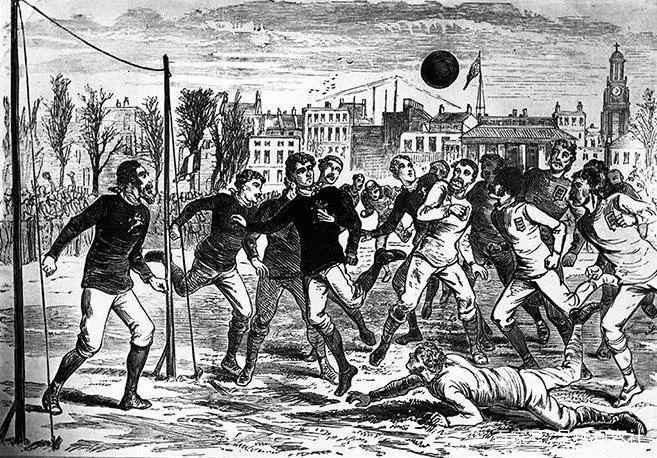

Few sports have influenced the world as profoundly as football.
Today, football is played by millions of people across virtually every continent. It fills enormous stadiums, brings countries together, creates fierce rivalries, produces global superstars, and attracts billions of viewers during major tournaments.
But the modern game did not appear overnight.
Football is the result of thousands of years of human fascination with kicking, carrying, throwing, and competing with a ball.
From ancient civilizations to medieval villages, from muddy English fields to magnificent modern stadiums, football has undergone an extraordinary transformation.
Its history is not simply the story of a sport.
It is the story of culture, competition, identity, technology, business, and human passion.
The Ancient Roots of Football
The exact origins of football are difficult to identify because civilizations around the world developed different forms of ball games.
One of the earliest known examples comes from ancient China.
A game called cuju involved players kicking a ball toward a target. It became popular during the Han Dynasty and was played in various forms for centuries.
Cuju was not identical to modern football, but it demonstrates that the basic idea of controlling a ball with the feet is extremely old.
Other ancient civilizations also played ball games.
The Greeks and Romans had their own ball games, some of which involved using the feet, although their rules and objectives were very different from modern football.
These early games demonstrate something important:
Human beings have been fascinated by ball games for thousands of years.
Football in Medieval Europe
As centuries passed, various forms of football-like games developed throughout Europe.
Medieval England became particularly famous for what historians often describe as folk football.
These games were very different from today’s organized sport.
There could be enormous numbers of participants.
Entire villages could become involved.
The objective might be to move a ball toward a particular location rather than score into a small goal.
Rules were often limited.
The games could be chaotic and extremely physical.
Players might kick, carry, push, and fight for possession.
There were few similarities to the carefully regulated football played today.
Yet these medieval games helped establish football as part of English popular culture.
The Birth of Modern Football
The transformation from chaotic folk games into organized football happened gradually.
During the 18th and 19th centuries, schools and universities in Britain began developing their own versions of football.
The problem was that different schools played by different rules.
Some allowed players to carry the ball.
Others focused primarily on kicking.
Some permitted significant physical contact.
Others introduced restrictions.
This created a problem whenever teams from different schools wanted to compete.
They needed a common set of rules.
That need would eventually change football forever.
The Football Association
A major turning point came in 1863.
Representatives from several English football clubs and schools met in London and established the Football Association, commonly known as the FA.
They created a standardized set of rules.
One of the most important decisions was separating football from rugby-style games.
Handling the ball was increasingly restricted.
The game became centered on kicking and controlling the ball with the feet.
This was the foundation of what became known as association football.
The name eventually gave rise to the word soccer, particularly in countries where other forms of football became popular.
Modern football had begun to take shape.
The Spread of Football
Once standardized rules existed, football became much easier to organize.
Clubs could play against one another.
Competitions could be established.
Referees could enforce common rules.
And the sport could spread beyond England.
British workers, sailors, soldiers, teachers, and businessmen helped introduce football to different parts of the world.
The sport gradually became popular throughout Europe, South America, Africa, and other regions.
Local communities began creating their own clubs.
Football was no longer simply an English pastime.
It was becoming an international sport.
The Birth of Professional Football
Initially, football was largely associated with amateur competition.
But as the sport became increasingly popular, talented players began receiving financial compensation.
Professionalism gradually developed.
In England, the growth of professional football led to the establishment of organized league competition.
The Football League was founded in 1888.
It became one of the world’s earliest organized national football leagues.
Twelve clubs participated in the first season.
The league system created a structured way for teams to compete throughout a season.
This model would eventually be copied around the world.
The FA Cup
Another important development was the FA Cup.
Established in 1871–72, it became one of football’s oldest and most famous knockout competitions.
Unlike a league, where teams play a long season, cup football created the possibility of dramatic elimination matches.
A smaller club could potentially defeat a much larger one.
This created one of football’s most beloved traditions:
the giant-killing story.
The FA Cup helped demonstrate how football could create drama that extended far beyond the pitch.
The Formation of FIFA
As football spread internationally, another organization became necessary.
In 1904, representatives from several European football associations founded FIFA, the Fédération Internationale de Football Association.
FIFA was established to help govern international football and coordinate competitions between national associations.
Over time, its influence grew enormously.
Today, FIFA is the governing body of international association football and organizes the world’s biggest football tournament:
the FIFA World Cup.
The First World Cup
The idea of a global international football tournament became reality in 1930.
The first FIFA World Cup was held in Uruguay.
Thirteen teams participated.
Uruguay eventually defeated Argentina in the final and became the first World Cup champions.
The tournament was much smaller than the modern World Cup.
There were no enormous television audiences.
There were no global sponsorship campaigns comparable to today’s competitions.
But the foundation had been established.
Every four years, nations would eventually compete for the most prestigious trophy in international football.
Football and the World Cup
The World Cup gradually became the centerpiece of international football.
Countries began building national teams around their best players.
Winning the tournament became a matter of enormous national pride.
The competition also produced some of football’s greatest stories.
Brazil’s dominance.
Argentina’s triumphs.
Germany’s consistency.
Italy’s defensive mastery.
France’s golden generations.
Spain’s possession-based revolution.
Each era produced new heroes and new footballing philosophies.
Brazil and the Rise of Pelé
One of the most important figures in World Cup history was Pelé.
Brazil won the World Cup in 1958, 1962, and 1970, and Pelé played a major role in those successes.
He became a global icon.
His skill, finishing, athleticism, and creativity helped transform football into an international spectacle.
Pelé demonstrated that football could create global celebrities whose influence extended far beyond their home countries.
The Rise of Club Football
While international football became increasingly important, club football was developing rapidly.
European leagues became more organized and competitive.
Clubs developed stronger identities.
Rivalries became deeply embedded in local cultures.
Teams such as Real Madrid, Barcelona, Manchester United, Liverpool, Bayern Munich, AC Milan, Inter Milan, Juventus, and many others developed huge international followings.
Football clubs became more than sporting organizations.
They became symbols of cities, communities, and cultures.
The European Cup
European club competition also transformed the sport.
The European Cup was introduced in the 1950s, bringing together champions from different European countries.
It eventually evolved into the modern UEFA Champions League.
The competition created a new stage where Europe’s best clubs could compete against one another.
Over time, winning the Champions League became one of the greatest achievements available to a football club.
The Evolution of Football Tactics
Football did not remain tactically unchanged.
Managers continuously experimented with new systems.
Early formations often emphasized attack.
Then teams began developing more sophisticated defensive structures.
The WM formation became influential.
Later came systems such as:
- 4-2-4
- 4-3-3
- 4-4-2
- 3-5-2
- 4-2-3-1
Modern football is now incredibly tactical.
Managers study opponents in enormous detail.
Players analyze movement patterns.
Teams use data to improve performance.
The sport has evolved from simply “playing football” into a highly sophisticated strategic competition.
Total Football
One of the most influential tactical philosophies emerged from the Netherlands.
Known as Total Football, the system emphasized fluid movement and positional interchange.
Players were expected to understand multiple positions.
The Netherlands became famous for this approach during the 1970s, particularly under coach Rinus Michels and players such as Johan Cruyff.
Although the Netherlands did not win the World Cup during that era, their style profoundly influenced football.
Cruyff later carried many of these ideas to Barcelona.
The Barcelona Revolution
Johan Cruyff eventually became one of the most influential figures in Barcelona’s history.
As a player and later as a manager, he helped establish a football philosophy based around possession, movement, technical quality, and positional intelligence.
Those ideas eventually influenced later generations of Barcelona coaches and players.
The philosophy became particularly powerful under Pep Guardiola.
The Guardiola Era
Pep Guardiola’s Barcelona team of the late 2000s and early 2010s became one of the most influential teams in modern football.
With players such as Lionel Messi, Xavi, Andrés Iniesta, Sergio Busquets, and others, Barcelona developed a possession-based style known as tiki-taka.
The team focused on:
- Short passing
- Movement
- Possession
- Pressing
- Positional play
- Technical excellence
Barcelona won numerous trophies and helped demonstrate how tactical philosophy could completely transform a team’s identity.
The Globalization of Football
During the late 20th and early 21st centuries, football became increasingly global.
Television transformed the sport.
Fans could now watch European leagues from thousands of kilometers away.
Players from Africa, South America, Asia, North America, and other regions increasingly moved to European clubs.
The Premier League became a global phenomenon.
The Champions League attracted enormous worldwide audiences.
Football was no longer primarily a local experience.
It had become a global entertainment industry.
African Football’s Growing Influence
Africa has produced some of football’s most extraordinary players.
Legends such as George Weah, Samuel Eto’o, Didier Drogba, Yaya Touré, Jay-Jay Okocha, and many others demonstrated the continent’s immense footballing talent.
African players have become increasingly important in European football.
Nations such as Nigeria, Ghana, Cameroon, Senegal, Ivory Coast, Egypt, Morocco, and Algeria have produced generations of talented players.
The success of African footballers has also inspired millions of young players across the continent.
Women’s Football
Football’s history is not complete without the development of women’s football.
Women have played organized football for more than a century, although women’s competitions faced significant restrictions and discrimination in many countries.
In England, for example, the FA banned women’s football on affiliated grounds from 1921 until 1971.
Despite these obstacles, women’s football continued to develop.
The modern women’s game has grown dramatically.
The FIFA Women’s World Cup has become a major international sporting event, attracting huge audiences.
Clubs have also invested increasingly in women’s teams.
Today, players such as Marta, Alexia Putellas, Megan Rapinoe, Aitana Bonmatí, and many others have become global stars.
The Premier League Era
In 1992, England’s top division was reorganized as the Premier League.
The competition quickly became one of the most commercially successful football leagues in the world.
Television rights generated enormous revenue.
International audiences expanded.
Foreign players and managers arrived.
Clubs became global brands.
Teams such as Manchester United, Arsenal, Chelsea, Liverpool, Manchester City, and Tottenham developed huge international fanbases.
The Premier League helped redefine football as a global entertainment industry.
The Age of Lionel Messi and Cristiano Ronaldo
The 21st century produced one of football’s greatest individual rivalries.
Lionel Messi and Cristiano Ronaldo dominated the sport for more than a decade.
Messi became famous for extraordinary dribbling, creativity, passing, and finishing.
Ronaldo became famous for his athleticism, aerial ability, finishing, and relentless mentality.
Their rivalry pushed both players to extraordinary levels.
They broke scoring records.
They won numerous trophies.
They collected individual awards.
And they created one of the greatest eras of individual excellence football has ever witnessed.
Technology Changes the Game
Modern football has also been transformed by technology.
Goal-line technology was introduced to help determine whether the ball had completely crossed the goal line.
Then came VAR — Video Assistant Referee.
VAR allows officials to review certain major decisions, including goals, penalties, red cards, and mistaken identity.
The technology has generated significant debate.
Supporters argue that it improves accuracy.
Critics argue that it can interrupt the flow and emotion of the game.
Regardless of the debate, technology is now an important part of modern football.
Football Today
Modern football is faster, more physical, more tactical, and more commercial than ever before.
Players are athletes as well as footballers.
They follow specialized training programs.
Nutrition is carefully monitored.
Recovery is scientifically managed.
Clubs use advanced data analysis.
Scouting has become increasingly sophisticated.
Managers study enormous amounts of information before matches.
Even individual player movements can be analyzed in detail.
The modern footballer operates in an environment that would have been almost unimaginable to players from a century ago.
The Future of Football
Football continues to evolve.
Technology will probably become even more important.
Artificial intelligence and advanced data analysis may influence scouting, tactics, injury prevention, and player development.
Young players are now identified at increasingly early ages.
Women’s football is continuing to grow.
Football is expanding into new markets.
And the world’s biggest clubs continue to attract fans from almost every corner of the planet.
Yet despite all these changes, the basic attraction remains remarkably simple.
A ball.
Two teams.
A goal.
And the desire to win.
Conclusion: More Than Just a Game
The history of football is ultimately the history of how a simple idea became a global phenomenon.
Ancient civilizations played ball games.
Medieval communities developed chaotic forms of folk football.
British schools standardized their rules.
The Football Association helped establish the foundations of modern association football.
Professional leagues emerged.
FIFA was created.
The World Cup transformed international competition.
European club football became a global spectacle.
Television and technology expanded the sport’s reach.
And generations of extraordinary players gave football its unforgettable moments.
From Pelé to Maradona, from Cruyff to Zidane, from Ronaldo to Messi, from Ronaldinho to Neymar, and from Mbappé to Haaland, every generation has produced players who have pushed the boundaries of what is possible.
But football’s greatest strength has never been its money, technology, or famous players.
It is its simplicity.
A child can kick a ball on a dusty street and feel exactly the same excitement as a professional footballer walking onto a packed stadium.
A small community can celebrate a local victory with the same passion that millions of people experience during a World Cup final.
That is the magic of football.
It crosses language.
It crosses borders.
It crosses cultures.
It brings strangers together.
It creates rivalries, friendships, heroes, heartbreak, and unforgettable memories.
From ancient ball games to the magnificent stadiums of the modern era, football has travelled an extraordinary distance.
And yet, at its heart, the game remains exactly what it has always been:
a ball, a field, two teams, and millions of people dreaming of the next goal.
Football is more than a sport.
It is a global language.
And its story is still being written.