

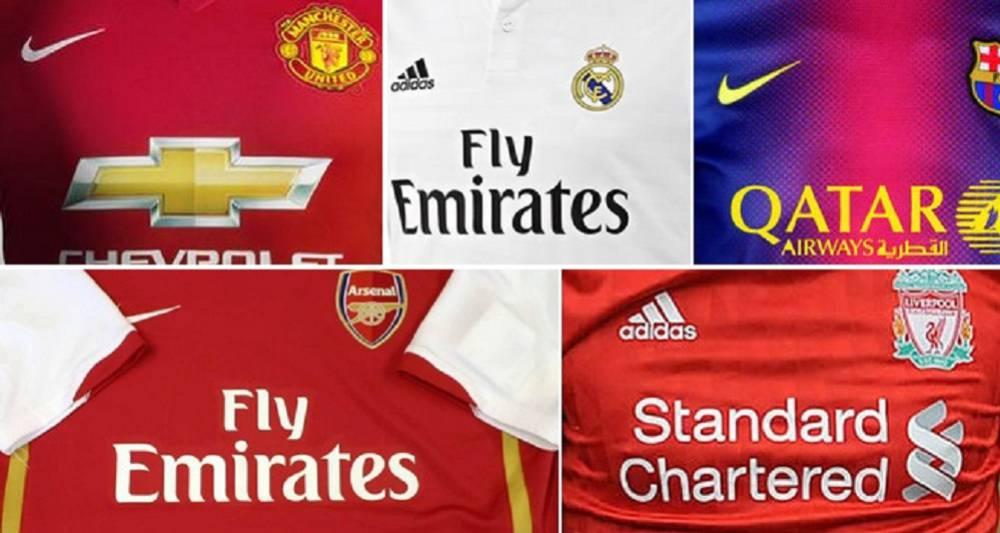

Football clubs are no longer just sporting organizations. They are enormous global businesses, and one of their most important sources of income is sponsorship.
Every time you watch a football match and see a company logo on a player’s shirt, around the stadium, on training equipment or across the club’s social-media pages, there is usually a commercial agreement behind it.
But how much are these companies actually paying?
Is a sponsor paying a club $1 million, $10 million or $100 million per year?
The answer is:
It depends enormously on the club, the type of sponsorship and the amount of exposure the company receives.
A small professional club might receive only hundreds of thousands of euros from a sponsor, while one of the world’s biggest clubs can receive tens of millions of euros from a single partnership.
At the very top of football, some sponsorship agreements are worth more than €100 million per year when kit manufacturing and major commercial partnerships are included.
Let’s break down exactly how football sponsorship works and how much companies are willing to pay.
Why Do Companies Sponsor Football Clubs?
Before looking at the money, it is important to understand why companies are willing to spend so much.
A football club gives a company something extremely valuable:
Access to millions of potential customers.
Imagine a company pays €50 million to sponsor a major football club.
That company may have its logo displayed:
- On the player’s shirt
- On training kits
- Inside the stadium
- During television broadcasts
- On social media
- On the club’s website
- In interviews
- On promotional materials
- During international tours
- In advertising campaigns featuring players
The sponsor isn’t simply buying a logo.
It is buying global visibility.
Not All Sponsorships Are Equal
This is one of the most important things to understand.
Football clubs have many different types of sponsors.
The most valuable positions generally include:
1. Front-of-shirt sponsor
The company’s logo appears on the front of the team’s main shirt.
This is usually one of the most expensive sponsorship positions.
2. Kit manufacturer
Companies such as Adidas, Nike and Puma pay clubs to manufacture their official kits.
These deals can be enormous.
3. Sleeve sponsor
A company’s logo appears on the sleeve.
This is generally worth less than the front of the shirt but can still be worth millions.
4. Training kit sponsor
The company appears on the team’s training clothing.
At major clubs, this can be extremely valuable.
5. Stadium sponsor
A company may have its name associated with a stadium or prominent stadium advertising space.
6. Official partner
A company may become an official partner of the club without appearing prominently on the playing shirt.
7. Regional partner
A club may sign companies specifically targeting certain geographical markets.
How Much Does a Front-of-Shirt Sponsor Pay?
The front of a football shirt is arguably the most valuable advertising space in football.
Millions of people see it every week.
The biggest clubs can command enormous amounts.
For example, Manchester United’s Snapdragon shirt sponsorship is reported at approximately £60 million per year. (talksport.com)
That means, over a five-year agreement, the value can reach approximately:
£300 million
if the annual value remains at £60 million throughout the agreement.
That is just one sponsorship.
Real Madrid’s Emirates Deal
Real Madrid provides another excellent example.
In September 2026, Real Madrid announced that Emirates had extended its partnership with the club until 2031. Emirates will remain the main sponsor of Real Madrid’s football and basketball teams.
Industry estimates put the new Emirates deal at approximately:
€74 million per year
according to sponsorship-market data.
If that figure is accurate, five years would represent roughly:
€370 million
in sponsorship value.
That demonstrates just how valuable a major football shirt can become.
But Some Clubs Receive Much Less
You shouldn’t assume every Premier League club receives £50–70 million.
The difference between the biggest clubs and smaller clubs is enormous.
Recent sponsorship-market data reported by the Financial Times shows that the average front-of-shirt deal for Premier League clubs outside the traditional “Big Six” has risen to around:
£9 million per year
for the 2026/27 season.
That is still a huge amount of money.
But compare it with a £60 million annual deal at Manchester United.
The difference is more than:
£50 million every year.
Why Do Big Clubs Get Paid More?
Because sponsors aren’t really buying the shirt.
They are buying the audience behind the shirt.
Consider two clubs.
Club A
2 million global followers.
Club B
200 million global followers.
A company will probably be willing to pay considerably more to associate itself with Club B.
The bigger the audience, the greater the potential advertising value.
How Much Do Kit Manufacturers Pay?
Kit manufacturers can be among the biggest sponsors.
Companies such as:
- Adidas
- Nike
- Puma
- New Balance
- Macron
- Castore
compete to manufacture football shirts.
And the biggest clubs can demand enormous contracts.
For example, industry sponsorship data estimates that Adidas pays Real Madrid approximately:
€120 million per year
for its kit manufacturing partnership.
That’s approximately:
€10 million every month
or about:
€2.3 million every week.
This is why football shirts are such valuable commercial assets.
Why Would Adidas Pay €120 Million a Year?
Because Adidas doesn’t simply make money from Real Madrid.
It sells:
- Real Madrid shirts
- Training kits
- Jackets
- Shoes
- Lifestyle clothing
- Children’s clothing
- Collectibles
- Other Real Madrid merchandise
Real Madrid supporters become potential Adidas customers.
The club therefore becomes a gigantic marketing platform for the sportswear company.
Sleeve Sponsorships
The sleeve is another valuable piece of advertising space.
Real Madrid’s partnership with HP provides an example.
Industry estimates place HP’s Real Madrid sleeve partnership at approximately:
€15 million per year
according to sponsorship-market data.
That’s an enormous amount for a relatively small area of a football shirt.
Why?
Because the shirt appears:
On television
In photographs
On social media
During interviews
In newspapers
On websites
In advertising campaigns
The sponsor receives exposure every time the team is shown.
Training Kit Sponsorship Can Also Be Worth Millions
Many people underestimate training-kit sponsorship.
Fans often think:
“It’s only a training shirt.”
But players are photographed constantly while training.
They also appear in:
- Press conferences
- Interviews
- Social-media videos
- Training-ground content
- Pre-match footage
That gives sponsors significant exposure.
Manchester United’s 2026 training-kit partnership with Betway was reported at:
£20 million per year
with the club describing it as the biggest standalone training-kit or sleeve sponsorship in football.
That’s an extraordinary amount for training clothing.
Stadium Sponsorship
Another major source of sponsorship money is the stadium.
A company can pay to have:
- Stadium naming rights
- Advertising boards
- Digital screens
- VIP lounges
- Hospitality areas
- Branded entrances
- Branded experiences
Naming rights can be especially valuable.
For example, a company could potentially pay hundreds of millions over a long-term agreement to have its name associated with a major stadium.
However, the biggest clubs are often reluctant to completely rename historic stadiums because the stadium’s existing name itself has enormous brand value.
Digital Sponsorship Is Growing
Football sponsorship is no longer limited to physical locations.
Social media has become extremely valuable.
A sponsor may receive:
- Instagram posts
- TikTok videos
- YouTube integration
- X/Twitter exposure
- Website advertising
- Player-created content
- Behind-the-scenes videos
Suppose a club has 100 million followers across its social platforms.
A sponsored video reaching 10 million people can provide enormous advertising value.
This is why digital rights are increasingly included in sponsorship agreements.
How Much Does Manchester United Make From Sponsorship?
Manchester United provides an interesting real-world example because the club publicly reports its sponsorship revenue.
For the financial year ending 30 June 2025, Manchester United recorded:
£188.4 million in sponsorship revenue
That was a 6% increase from the previous year.
The club’s total commercial revenue was:
£333.3 million
which includes sponsorship plus retail, merchandising, apparel and product licensing.
So Manchester United demonstrates something important:
The club doesn’t depend on one sponsor.
It has an entire portfolio of commercial relationships.
One Club Can Have Dozens of Sponsors
A major football club can have partnerships across numerous industries.
For example:
Main shirt sponsor
Could be worth €50–75 million annually.
Kit manufacturer
Could be worth €50–120+ million annually.
Sleeve sponsor
Could be worth €10–20 million.
Training sponsor
Could be worth €10–20 million.
Official partners
Could generate millions collectively.
Regional partners
Could add even more.
When everything is combined, a major club can generate well over €100 million a year from sponsorship and commercial partnerships.
How Much Do Smaller Clubs Get?
This is where the numbers become much more modest.
A lower-level professional club might receive:
€50,000–€500,000
from a significant local sponsor.
A stronger club in a major European league might command:
€1–5 million
for a major sponsorship.
A mid-table Premier League club might command:
Several million to around €10 million+
for its main shirt sponsor.
The biggest clubs can demand:
€50–100+ million
for their most valuable partnerships.
These are broad ranges, not fixed prices.
What Determines the Sponsorship Price?
Several factors influence how much a sponsor pays.
1. Global fanbase
More fans generally means more commercial value.
2. Television audience
More viewers means greater exposure.
3. Sporting success
Winning trophies increases visibility.
4. League
Premier League clubs generally have enormous international exposure.
5. Star players
Superstars can dramatically increase marketing value.
6. Social-media followers
Digital reach is increasingly important.
7. Stadium
Large, modern stadiums create additional opportunities.
8. International markets
A club popular in Africa, Asia or the Middle East may be particularly attractive to companies trying to enter those markets.
9. Exclusivity
A sponsor may pay more if it receives exclusive rights within an industry.
The Sponsor Doesn’t Always Pay Cash
This is another important detail.
Some sponsorship agreements aren’t entirely cash.
A company may provide:
- Equipment
- Technology
- Vehicles
- Flights
- Food
- Accommodation
- Services
in addition to cash.
For example, an airline partnership could include flights for players and staff.
A technology partner could provide equipment and services.
Therefore, the total value of a sponsorship deal can include both cash and in-kind benefits.
Why Sponsors Sometimes Pay More Than a Player’s Salary
Here’s something interesting.
A company might pay a football club:
€50 million per year
for sponsorship.
Meanwhile, the club might pay one player:
€20 million per year
in wages.
Why would the sponsor pay so much?
Because the sponsor expects the partnership to generate commercial value.
If a company can spend €50 million and generate €100 million or more in additional sales, brand value and customer acquisition, the investment makes financial sense.
Sponsorship Can Help Pay Players
This connects directly to the question you asked earlier about how football clubs can afford to pay players weekly.
Imagine a club receives:
€60m from its shirt sponsor
€100m from its kit manufacturer
€15m from sleeve sponsorship
€20m from training sponsorship
€30m from other commercial partners
That’s:
€225 million
from sponsorship and commercial partnerships alone.
The club can then combine that money with:
- Broadcasting
- Ticket sales
- UEFA revenue
- Merchandise
- Player sales
and potentially generate hundreds of millions of euros.
That is how football clubs can afford enormous player salaries.
The Biggest Sponsorship Deals Are Becoming More Valuable
The sponsorship market is becoming increasingly competitive.
The Financial Times reports that Premier League commercial revenue has grown dramatically over the league’s history, reaching almost £2.4 billion for the clubs, while shirt sponsorship values have risen sharply.
Technology, financial services, airlines and other international industries are increasingly competing for football’s advertising space.
This is particularly noticeable as traditional betting sponsorships have faced new restrictions in England.
Why the Premier League Is So Attractive to Sponsors
The Premier League has one major advantage:
Global reach.
A Premier League match can be watched across:
- Africa
- Asia
- Europe
- North America
- South America
- Middle East
This makes Premier League clubs incredibly valuable to international companies.
A sponsor doesn’t have to be interested only in English customers.
It can use the club to reach customers around the world.
Real Madrid vs Manchester United vs Manchester City
Consider three of football’s biggest commercial brands.
| Club | Example commercial/sponsorship figures |
|---|---|
| Real Madrid | €594m commercial revenue in 2024/25 |
| Manchester United | £188.4m sponsorship revenue in 2024/25 |
| Manchester City | £340.4m commercial revenue in 2024/25 |
The figures are not directly comparable because clubs classify sponsorship and commercial income differently, but they demonstrate the enormous scale of football sponsorship.
How Much Does a Sponsor Pay Per Week?
Let’s use a hypothetical €60 million annual sponsorship deal.
€60 million ÷ 52 weeks ≈
€1.15 million per week
That’s more than:
€164,000 per day.
And that’s from one sponsorship agreement.
A major club may have dozens of partnerships.
How Much Does a €100 Million Sponsorship Deal Mean Per Month?
€100 million ÷ 12 months ≈
€8.33 million per month
That’s approximately:
€1.92 million per week.
Again, this illustrates the enormous scale of elite football sponsorship.
The World’s Biggest Clubs Are Essentially Advertising Platforms
This is probably the easiest way to understand modern football sponsorship.
A club such as Real Madrid or Manchester United isn’t simply selling a shirt position.
It is selling access to:
Millions of fans
Television audiences
Social-media followers
Stadium visitors
International markets
Players
Football culture
That is why companies are willing to spend tens of millions of euros or pounds.
Final Answer: How Much Do Sponsors Pay Football Clubs?
There is no single amount.
It depends on the club and the type of sponsorship.
A rough picture of the market looks like this:
| Type of sponsorship | Typical range |
|---|---|
| Small/local club sponsor | €50k–€500k+ |
| Smaller professional club main sponsor | €500k–€5m+ |
| Mid-level major-league shirt sponsor | €5m–€15m+ |
| Top-league shirt sponsor | €15m–€40m+ |
| Elite club shirt sponsor | €50m–€75m+ |
| Elite kit manufacturer | €50m–€120m+ |
| Major sleeve sponsor | €10m–€20m+ |
| Elite training-kit sponsor | €10m–€20m+ |
| Complete commercial portfolio | €100m–€300m+ annually |
These ranges are illustrative rather than fixed market rates; individual contracts can be substantially higher or lower.
And the biggest clubs demonstrate just how large the market has become.
Real Madrid’s reported commercial revenue was €594 million in 2024/25, while Manchester United recorded £188.4 million in sponsorship revenue in the same broad period.
The key lesson is this:
Football clubs don’t just sell football. They sell attention.
Every shirt, match, interview, social-media post and stadium event gives sponsors another opportunity to put their brand in front of millions of people.
And when a club has hundreds of millions of supporters worldwide, that attention can be worth hundreds of millions of euros every year.
That’s why the biggest football clubs are now some of the most valuable advertising platforms in the world.