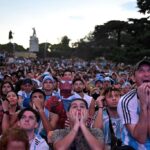


When we talk about the biggest football crowds in history, one match stands above almost everything else.
It was played more than 75 years ago, in an era when football stadiums did not have the modern safety regulations and individual seats that are common today.
The match was:
Brazil vs Uruguay
It was played at the legendary Maracanã Stadium in Rio de Janeiro, Brazil, on 16 July 1950.
The official attendance was 173,850 people, making it the largest officially recorded attendance for a football match according to Guinness World Records. However, unofficial estimates put the number of people inside the stadium at around 199,854, with some historical accounts suggesting the crowd may have exceeded 200,000.
What makes the story even more extraordinary is that the enormous crowd had gathered expecting to celebrate a Brazilian World Cup triumph.
Instead, they witnessed one of the greatest upsets in football history.
The Match That Drew Nearly 200,000 People
The date was 16 July 1950.
The location was the newly constructed Maracanã Stadium.
Brazil was hosting the World Cup, and expectations were enormous.
Brazil had built a powerful team and had home advantage.
The country was convinced that victory was within reach.
The match was technically not a conventional World Cup final because the 1950 tournament used a final round-robin group rather than a single final. However, the Brazil-Uruguay match was effectively the championship decider. FIFA describes it as the decisive final match of the tournament.
Brazil needed only a draw to finish as champions.
Uruguay, however, needed to win.
Almost everything appeared to favor Brazil.
And then came the shock.
The Incredible Atmosphere at the Maracanã
The Maracanã was unlike most football stadiums today.
Modern stadiums are generally designed around individual seats, controlled entrances, strict capacity limits and extensive safety regulations.
The Maracanã of 1950 was very different.
It was an enormous bowl capable of holding a gigantic crowd.
On that afternoon, Brazilians poured into the stadium.
The official attendance was 173,850, but thousands of additional people reportedly entered without tickets, contributing to estimates approaching 200,000 spectators. Guinness World Records lists 199,854 as the unofficial figure.
Imagine that for a moment.
Nearly 200,000 people watching one football match.
That is more than the population of many cities.
And virtually everyone in the stadium was expecting the same thing:
Brazil to become world champions.
Brazil Takes the Lead
The first half ended without a goal.
The tension inside the stadium must have been extraordinary.
Then, shortly after halftime, Brazil finally broke the deadlock.
In the 47th minute, Friaça scored for Brazil.
The stadium erupted.
Brazil were 1–0 ahead.
The crowd had received the moment they had been waiting for.
The World Cup appeared to be heading toward Brazil.
But Uruguay had other plans.
Uruguay Fights Back
Uruguay refused to collapse.
In the 66th minute, Juan Alberto Schiaffino equalized.
Suddenly, the enormous crowd became nervous.
The score was now:
Brazil 1–1 Uruguay
Brazil still had the advantage because a draw would be enough.
But Uruguay continued attacking.
Then came one of the most famous moments in World Cup history.
Ghiggia Changes Everything
In the 79th minute, Uruguay’s Alcides Ghiggia scored.
Brazil:
1
Uruguay:
2
The stadium was stunned.
The team expected to win the World Cup was suddenly behind.
And there was very little time remaining.
Brazil desperately tried to find an equalizer.
But Uruguay held on.
The final whistle eventually came.
Brazil 1–2 Uruguay.
Uruguay had won the World Cup.
The enormous Brazilian crowd had witnessed an extraordinary sporting tragedy.
The “Maracanazo”
The match became known as the Maracanazo, a term referring to Uruguay’s stunning victory at the Maracanã.
FIFA describes the match as one of the most famous upsets in World Cup history.
The psychological impact on Brazil was enormous.
The defeat became part of the country’s football history.
Brazil had been expected to celebrate.
Instead, Uruguay celebrated.
The match became much more than a football game.
It became a symbol of the unpredictability of sport.
Why Was the Crowd So Huge?
There were several reasons.
1. Brazil Was Hosting the World Cup
Hosting the tournament created enormous national excitement.
People from across Brazil wanted to witness their national team compete for the biggest prize in football.
2. The Maracanã Was Enormous
The stadium had been constructed on a massive scale.
Unlike modern all-seater stadiums, the original Maracanã could accommodate huge numbers of spectators.
3. Brazil Was Expected to Win
The country wasn’t simply hoping for victory.
There was enormous confidence that Brazil would become world champions.
4. The Match Was the Decider
Everything came down to this match.
Brazil needed only a draw.
Uruguay needed victory.
The stakes were enormous.
How Does This Compare With Modern Football Crowds?
Today’s biggest football stadiums generally cannot accommodate crowds anywhere near 200,000.
This is largely because modern stadiums have strict capacity regulations, individual seating, controlled entrances and much stronger safety requirements.
The modern Maracanã, for example, has a dramatically smaller capacity than it did in 1950.
Consequently, the record set by the Brazil-Uruguay match is extremely difficult to imagine being broken.
Guinness World Records continues to recognize the 1950 match as the record-holder for the largest official attendance at a football match.
Was the Attendance Really 200,000?
This is where the story becomes interesting.
You will often see different numbers when reading about this match.
Some sources say:
173,850
Others say:
199,854
And some historical accounts describe the crowd as approximately:
200,000 or more.
These numbers aren’t necessarily contradictory.
The 173,850 figure is the official attendance recognized by Guinness World Records for the match.
The 199,854 figure represents an unofficial estimate, reflecting people who entered the stadium without tickets and other factors.
FIFA itself describes the Maracanã as being packed with around 200,000 home fans and notes that the official attendance was 173,850.
So if you’re creating an article or video, the safest wording is:
The official attendance was 173,850, while unofficial estimates put the crowd at nearly 200,000.
The Biggest Club Match Crowd
The overall record is different from the record for a club match.
One of the largest crowds ever recorded for a club football match also occurred at the Maracanã.
On 15 December 1963, approximately 194,603 spectators were reported for the Brazilian derby between Flamengo and Fluminense.
The match ended:
Fluminense 0–0 Flamengo.
The attendance is widely recognized as the largest crowd for a club match at the Maracanã. Historical stadium statistics list 194,603 people present.
That is another incredible number.
Imagine almost 195,000 people attending a domestic club match.
What About the Famous 1923 FA Cup Final?
There is another important match when discussing historic football crowds.
The 1923 FA Cup Final between Bolton Wanderers and West Ham United was played at the original Wembley Stadium.
The match became famous for enormous overcrowding.
Officially, 126,047 admissions were counted, but estimates suggested that the actual crowd could have been around 150,000–160,000.
People reportedly spilled onto the pitch, and mounted police were famously involved in controlling the crowd.
Guinness notes that the estimated attendance may have reached approximately 160,000, although the counted admissions were 126,047.
It is therefore another important part of the history of enormous football crowds.
Why These Records Will Probably Never Be Broken
The modern football environment is completely different.
Imagine trying to put 200,000 people into a modern stadium.
It would create enormous challenges involving:
- Safety
- Emergency exits
- Crowd control
- Ticketing
- Seating
- Security
- Transportation
- Medical facilities
- Fire regulations
- Structural capacity
Modern stadiums are deliberately designed to prevent the kind of uncontrolled overcrowding seen in some historic matches.
As a result, even though football is more popular globally than ever, the biggest modern stadiums generally cannot accommodate the enormous crowds seen at places like the Maracanã in the 1950s.
The Psychological Impact of the Match
The size of the crowd made the defeat even more painful.
Imagine entering a stadium surrounded by nearly 200,000 people.
Everyone is celebrating when your team scores.
Then the opposition equalizes.
Then the opposition scores again.
Suddenly, the entire stadium becomes silent.
That is essentially what happened at the Maracanã.
The match became a national trauma.
Brazil had been preparing for celebration.
Instead, the country had to deal with an unexpected defeat on the biggest possible stage.
The Birth of a New Brazilian Football Identity
The defeat also had an influence on Brazilian football culture.
Brazil’s traditional white kit with blue trim was eventually replaced by the famous yellow and green colors that became synonymous with Brazilian football.
The 1950 defeat is often cited as an important moment in the development of Brazil’s football identity.
The country eventually recovered spectacularly.
Just eight years later, Brazil won its first World Cup in Sweden in 1958, led by a teenage Pelé.
Brazil would go on to become the most successful nation in men’s World Cup history.
But the memory of 1950 never completely disappeared.
The Record That Became a Football Legend
There are many impressive football records.
The most goals scored by a player.
The most World Cup victories.
The longest unbeaten runs.
The fastest goals.
But attendance records are different.
They tell us something about the relationship between football and society.
In 1950, nearly 200,000 people gathered because they believed they were about to witness history.
They were right.
They just witnessed a different kind of history than they expected.
Final Verdict: The Biggest Football Crowd Ever
If you’re looking for the football match with the largest officially recorded attendance in history, the answer is:
Brazil 1–2 Uruguay
Date: 16 July 1950
Stadium: Maracanã, Rio de Janeiro, Brazil
Competition: 1950 FIFA World Cup
Official attendance: 173,850
Unofficial estimate: 199,854, with some accounts describing the crowd as around 200,000
Winner: Uruguay
Goals: Friaça (Brazil), Schiaffino (Uruguay), Ghiggia (Uruguay)
Historical name: The Maracanazo
Guinness World Records recognizes the 173,850 official attendance as the largest official attendance at a football match, while FIFA also identifies the game as having a record World Cup crowd and notes estimates of around 200,000.
And perhaps the most remarkable part of the story is that this wasn’t just the biggest crowd.
It was also one of football’s greatest upsets.
Nearly 200,000 people entered the Maracanã expecting to witness Brazil become world champions.
Instead, they watched Uruguay come from behind to win 2–1.
The crowd came expecting a celebration.
They left having witnessed history.
And more than seven decades later, the Maracanã crowd of 1950 remains the benchmark for football attendance.