

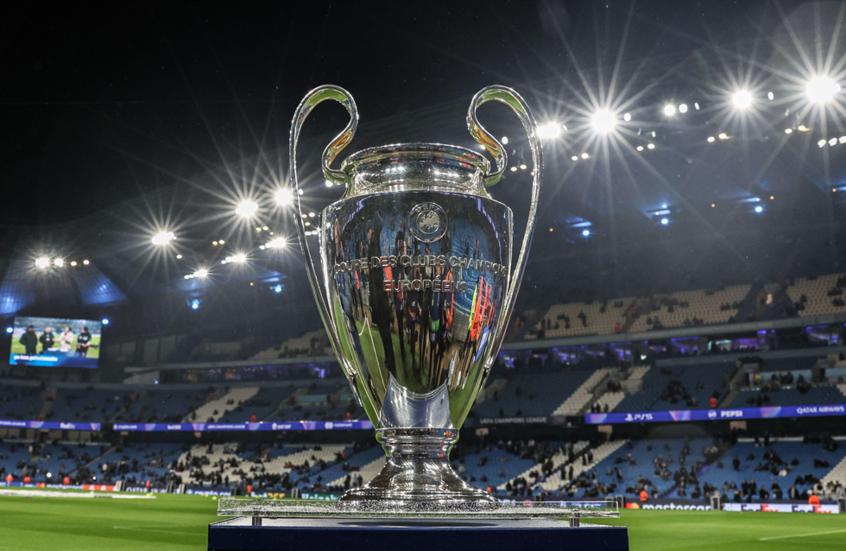

The UEFA Champions League (UCL) is the biggest club competition in European football, and it is also an enormous financial machine.
Every season, Europe’s best clubs compete for the trophy, but they are also competing for something else:
Hundreds of millions of euros in revenue.
For clubs such as Real Madrid, Barcelona, Manchester City, Bayern Munich, Liverpool, Arsenal, Paris Saint-Germain and other European giants, qualifying for the Champions League can dramatically change their finances.
The competition generates money from broadcasting rights, sponsorships, commercial partnerships, ticketing and other sources. UEFA then distributes a large proportion of the money back to participating clubs according to a complicated formula involving participation, results, league position and the commercial value of each club’s market.
For the 2025/26 season, UEFA projected that its men’s club competitions — the Champions League, Europa League, Conference League and Super Cup — would generate approximately €4.4 billion in gross revenue. Of that, €3.317 billion was allocated for distribution to clubs participating from the league phase onward.
The Champions League and Super Cup alone account for €2.467 billion of that club-distribution pot.
That is where the numbers become fascinating.
How Much Does the Champions League Generate?
There is an important distinction here.
UEFA doesn’t publish the Champions League’s revenue as simply:
“The Champions League made exactly €X.”
Instead, UEFA operates its men’s club competitions as part of a broader financial system.
For the 2025/26 season, UEFA projects:
Gross revenue from men’s club competitions: €4.4 billion
This includes:
- Champions League
- Europa League
- Conference League
- UEFA Super Cup
After costs and various allocations, €3.317 billion is available for distribution to clubs participating in the centralised league phases.
Of that:
Champions League + Super Cup: €2.467 billion
Europa League: €565 million
Conference League: €285 million
So the Champions League is by far the largest financial component of UEFA’s men’s club competitions.
Why Does the Champions League Generate So Much Money?
The answer is simple:
Millions of people want to watch it.
The Champions League contains some of the biggest clubs and most famous players in world football.
A match between Real Madrid and Manchester City, for example, can attract enormous global attention.
That audience is extremely valuable to broadcasters and sponsors.
UEFA therefore sells the rights to broadcast Champions League matches in different territories around the world.
Broadcasters pay UEFA because they can then attract:
- Subscribers
- Viewers
- Advertisers
- Sponsors
- Streaming customers
The more people who want to watch, the more valuable the broadcasting rights become.
Broadcasting Is the Biggest Engine
Television and streaming rights are a fundamental source of Champions League revenue.
UEFA sells media rights to broadcasters across Europe and internationally.
Companies pay for the right to show matches because Champions League football attracts a huge audience.
This creates a chain:
Fans watch football
⬇️
Broadcasters need attractive content
⬇️
Broadcasters pay UEFA
⬇️
UEFA generates revenue
⬇️
UEFA distributes much of that revenue to clubs
That is one of the main reasons Champions League participation is so valuable.
How Much Does Each Champions League Club Receive Just for Participating?
Under the 2025/26 distribution model, the 36 clubs participating in the Champions League league phase share an equal starting pot of €670 million.
That works out to approximately:
€18.62 million per club
before performance-related and other distributions are added.
So a club that qualifies for the Champions League league phase is already guaranteed a substantial amount simply for being there.
But that’s only the beginning.
Clubs Can Earn More for Winning Matches
The Champions League doesn’t simply pay clubs for showing up.
Performance matters.
Under the new format, clubs can receive additional payments based on their results in the league phase and their progress through the knockout stages.
That means:
Win more → earn more.
Progress further → earn more.
A club that reaches the final can therefore earn dramatically more than a club that is eliminated early.
The New Champions League Format Makes the Money More Interesting
Since the 2024/25 season, the Champions League has operated under a new format.
The old group stage had 32 teams divided into eight groups of four.
The new competition has:
36 teams
playing in a single league phase.
Each club plays eight matches against different opponents.
The teams are then ranked together in one league table.
The new format also increases the number of matches and creates more opportunities for UEFA and clubs to generate revenue.
What Determines How Much a Club Receives?
The Champions League distribution isn’t simply:
“Every club gets the same amount.”
Instead, the money is divided into several categories.
The major components include:
1. Equal share
2. Performance payments
3. League-position payments
4. Value pillar
This means two clubs can participate in exactly the same competition and still receive significantly different amounts.
1. The Equal Share
Every club entering the league phase receives the same starting amount.
For 2025/26, that is approximately:
€18.62 million
per Champions League club from the equal-share pot.
This creates a financial floor.
Even a club that performs badly can still receive a significant amount simply because it qualified.
2. Performance Payments
Clubs receive additional money depending on their results.
Winning matches is financially valuable.
Drawing matches is also worth money, although less than winning.
This creates another incentive for clubs to take the competition seriously.
A club that wins several league-phase matches can accumulate millions more than a club that struggles.
3. League-Position Payments
The new Champions League format ranks all 36 teams together.
Therefore, finishing higher in the league phase can generate additional financial rewards.
A club finishing near the top can receive more than one finishing near the bottom.
This adds another financial incentive to perform well.
4. The Value Pillar
This is one of the most complicated parts.
The value pillar considers the commercial value of a club and the value of the relevant media market.
In simple terms, clubs that bring enormous commercial and broadcasting value to UEFA can receive additional money.
This is one reason why the biggest clubs can earn substantially more than smaller clubs even when they achieve similar sporting results.
Why Real Madrid Can Earn More Than a Smaller Club
Imagine two clubs both reach the Champions League quarter-finals.
They have received the same starting payment.
They have won the same number of matches.
They finish at similar positions.
But one is Real Madrid, with an enormous global following and huge historical commercial value.
The other is a relatively small club from a smaller football market.
Their final UEFA distributions can still be significantly different because of the value component.
This is one of the reasons the financial gap between Europe’s biggest clubs and smaller clubs remains substantial.
How Much Can the Champions League Winner Make?
There isn’t one simple fixed figure such as:
“The winner gets €100 million.”
The winner’s total Champions League income depends on:
- Starting fee
- League-phase results
- League position
- Knockout bonuses
- Value pillar
- Other distributions
Therefore, the final amount varies from club to club.
A successful champion that performs strongly throughout the competition can accumulate well over €100 million from UEFA-related Champions League distributions when all relevant components are included.
And that’s before considering the club’s own:
- Ticket revenue
- Sponsorships
- Merchandise
- Hospitality
- Commercial income
This is why winning the Champions League can have an enormous financial impact.
The Champions League Is Worth More Than the Prize Money
This is one of the most important points.
Suppose a club wins the Champions League.
The financial benefit isn’t limited to UEFA’s payment.
The club can also gain:
More sponsorship money
Companies may become more interested in the club.
More merchandise sales
Fans may buy Champions League-winning shirts and memorabilia.
Higher ticket demand
Fans want to watch European champions.
More global supporters
Success increases international popularity.
Higher commercial value
The club becomes a more attractive partner for businesses.
Greater player attraction
Top footballers may be more interested in joining a Champions League-winning club.
So winning the trophy can create a financial effect that continues for years.
How Much Money Goes to Clubs Outside the Champions League?
The Champions League is only one part of UEFA’s financial system.
For 2025/26:
Champions League + Super Cup:
€2.467 billion
Europa League:
€565 million
Conference League:
€285 million
Together, these amount to €3.317 billion for clubs participating in the centralised phases.
So UEFA isn’t simply enriching Champions League clubs.
It distributes money throughout European club football.
What About Clubs That Don’t Qualify for Europe?
This is another important part of UEFA’s system.
UEFA provides solidarity payments to clubs that do not participate in the central phases of its competitions.
For 2025/26, solidarity payments are expected to total:
€308 million
These funds support clubs that aren’t participating in the Champions League, Europa League or Conference League and are intended particularly for development purposes.
That means UEFA’s revenue doesn’t only benefit Europe’s biggest clubs.
Some money is distributed throughout the football pyramid.
UEFA’s Overall Financial Model
UEFA explains that it distributes the vast majority of its net earnings back into football.
Its revenue supports:
- European club competitions
- National associations
- Grassroots football
- Youth development
- Women’s football
- Futsal
- Coaching
- Refereeing
- Infrastructure
- Other football-development programmes
So when Champions League broadcasting rights generate billions, UEFA doesn’t simply keep the entire amount.
A large proportion is redistributed.
How Much Does a Club Get for Qualifying?
There is also money available during the qualifying stages.
Clubs that participate in Champions League qualifying can receive payments even if they fail to reach the league phase.
For example, UEFA reported in July 2026 that Tre Fiori received €175,000 for appearing in the first qualifying round and would receive an additional elimination payment depending on where its European campaign ended.
This is particularly important for clubs from smaller football nations.
Even a short Champions League campaign can represent significant income compared with their normal domestic revenue.
Why Champions League Qualification Is So Important to Premier League Clubs
Let’s connect this to your previous question about the Premier League.
Suppose Arsenal finishes high enough in the Premier League to qualify for the Champions League.
Arsenal doesn’t just receive its Premier League income.
It can now potentially earn:
Premier League revenue
Champions League starting payment
Champions League performance payments
Champions League knockout payments
Additional matchday revenue
Additional commercial opportunities
That’s why Champions League qualification can be worth tens of millions of pounds or euros to a club.
And for a club that goes deep into the competition, the financial impact can become enormous.
Why Missing the Champions League Hurts
The opposite is also true.
Imagine a club has a wage bill of hundreds of millions of pounds.
It has expensive players.
It has a huge stadium.
It has commercial commitments.
Then it fails to qualify for the Champions League.
The club loses the UEFA income it expected.
It may also lose:
- Matchday revenue
- Sponsorship bonuses
- Commercial exposure
- Global visibility
- Player attraction
This is why finishing fourth instead of fifth in a domestic league can have an enormous financial consequence.
How Much Money Does the Champions League Generate Compared With the Premier League?
The two competitions operate differently.
The Premier League’s clubs collectively generated about £6.8 billion in revenue in 2024/25, according to Deloitte.
UEFA’s entire men’s club competition portfolio is projected to generate approximately €4.4 billion in gross revenue in 2025/26.
But don’t directly compare these figures as if they are identical measurements.
The £6.8 billion is combined revenue generated by Premier League clubs, including their own commercial and matchday income.
The €4.4 billion is gross revenue from UEFA’s men’s club competitions.
They are measuring different things.
A Simple Example
Let’s imagine a hypothetical club called Football Club X.
It qualifies for the Champions League league phase.
It receives approximately:
€18.62m starting fee
Then it earns:
€10m from match results
Then:
€8m from league position
Then:
€20m from knockout progress
Then:
€25m from its value pillar
Its UEFA-related income could therefore approach:
€81.6 million
And that’s before considering additional revenue the club generates itself from Champions League matches.
This is just an illustration. Actual payments depend on UEFA’s distribution formula and the club’s circumstances.
The Champions League Is a Huge Business
Ultimately, the Champions League works because football has enormous commercial value.
UEFA sells the spectacle.
Broadcasters buy the rights.
Sponsors buy association with the competition.
Fans buy tickets.
Millions of people watch.
Clubs compete.
And UEFA distributes a large proportion of the resulting income back into European football.
The trophy is obviously the ultimate sporting prize.
But financially, the Champions League can be almost as important.
The Numbers at a Glance
For the 2025/26 UEFA men’s club competition cycle, UEFA projects:
| Category | Amount |
|---|---|
| Gross revenue – all men’s club competitions | €4.4bn |
| Net revenue | €3.548bn |
| Distributed to central-phase clubs | €3.317bn |
| Champions League + Super Cup | €2.467bn |
| Europa League | €565m |
| Conference League | €285m |
| Solidarity payments | €308m |
| Champions League equal-share pot | €670m |
| Champions League starting payment per club | €18.62m |
These are UEFA’s official projected figures for the 2025/26 season.
Final Answer: How Much Does the UCL Generate and Pay Teams?
The Champions League is a multi-billion-euro business.
For the 2025/26 season, UEFA’s men’s club competitions are projected to generate approximately €4.4 billion in gross revenue.
After costs and other allocations, approximately €3.317 billion is being distributed to clubs participating from the league phase onward across the Champions League, Europa League and Conference League.
Of that, approximately €2.467 billion goes to the Champions League and Super Cup.
Every Champions League league-phase club receives an equal starting payment of approximately €18.62 million.
From there, clubs can earn substantially more through:
Winning matches
Finishing higher in the league phase
Reaching the knockout stages
Reaching the semi-finals
Reaching the final
Winning the trophy
Value-pillar distributions
So the club that simply qualifies receives tens of millions, while a successful giant that goes all the way can potentially generate well over €100 million from the competition-related distributions, depending on its performance and value-pillar allocation.
And that’s why the Champions League is so important.
For a football club, qualifying isn’t just about playing against Europe’s best.
It’s a massive financial opportunity.
A deep Champions League run can help a club pay its players, strengthen its squad, improve its stadium, attract sponsors, increase merchandise sales and grow its global fanbase.
In other words: