

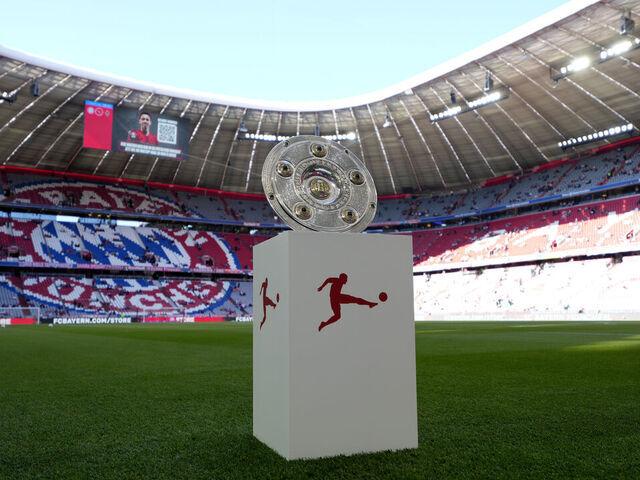

The Bundesliga is one of the richest and most commercially successful football leagues in the world. It is home to famous clubs such as Bayern Munich, Borussia Dortmund, Bayer Leverkusen, RB Leipzig, Eintracht Frankfurt and VfB Stuttgart, and it is particularly famous for its huge attendances and passionate supporters.
But how much money does the Bundesliga actually generate?
And how much of that money goes back to the clubs?
The latest figures from the Deutsche Fußball Liga (DFL) provide a very clear answer.
For the 2024/25 season, Bundesliga clubs generated a record:
€5.12 billion
in total revenue.
This was the first time the Bundesliga had crossed the €5 billion mark. Revenue increased by approximately €320.8 million, or 6.7%, compared with the previous season.
That makes the Bundesliga one of the financial giants of European football.
Where Does the Bundesliga Generate Its Money?
The Bundesliga doesn’t rely on just one source of income.
Its money comes primarily from:
- 📺 Media and broadcasting rights
- 🤝 Advertising and sponsorship
- ⚽ Player transfers
- 🏟️ Matchday revenue
- 👕 Merchandise
- 💼 Other commercial activities
The 2024/25 figures were approximately:
| Revenue source | 2024/25 revenue |
|---|---|
| Media rights | €1.703bn |
| Advertising | €1.146bn |
| Player transfers | €873m |
| Matchday | €599m |
| Merchandising | €285m |
| Other revenue | €517m |
| Total | €5.123bn |
These figures come directly from the DFL’s 2024/25 Economic Report.
So, unlike some leagues that depend overwhelmingly on television money, the Bundesliga has a relatively diversified revenue structure.
1. Media Rights — €1.7 Billion
Broadcasting is the Bundesliga’s largest individual source of revenue.
In 2024/25, German Bundesliga clubs generated approximately:
€1.703 billion
from media revenue.
That represented about 33.2% of the league’s total revenue.
The DFL sells broadcasting rights to television and streaming companies.
These broadcasters pay for the ability to show Bundesliga matches to viewers in Germany and internationally.
The reason the rights are so valuable is obvious.
Millions of people want to watch:
Bayern Munich
Borussia Dortmund
Bayer Leverkusen
RB Leipzig
and the other Bundesliga clubs.
How Much Is the Bundesliga TV Deal Worth?
The DFL’s current German-language media-rights agreement covering the 2025/26 through 2028/29 seasons generates approximately:
€1.121 billion per season
for Bundesliga and Bundesliga 2 rights combined.
The Bundesliga receives the majority of that domestic distribution.
However, the €1.121 billion should not be described as the entire Bundesliga’s global broadcasting revenue because it specifically concerns the German-language rights package and covers both Bundesliga and Bundesliga 2.
International broadcasting rights are handled separately.
How Much TV Money Goes to Bundesliga Clubs?
This is where things get particularly interesting.
For the 2024/25 season, the DFL distributed approximately:
€964.8 million
in domestic TV money to the 18 Bundesliga clubs.
The remaining approximately €260.2 million went to the 18 clubs in the 2. Bundesliga, from the total €1.225 billion domestic distribution pool for the two divisions.
There were also international TV distributions handled separately.
So Bundesliga clubs don’t simply receive an equal amount.
The distribution system rewards clubs according to several factors.
How Is Bundesliga TV Money Divided?
The Bundesliga’s distribution system is based on a four-pillar model.
For the 2024/25 distribution, the broad formula was:
50% — Equal distribution
43% — Sporting performance
4% — Youth development
3% — Fan interest/popularity
This is an important difference from simply giving the champion the largest payment.
A club’s position is influenced by its performance over several seasons, not merely where it finishes in one particular year.
This provides smaller clubs with a degree of financial stability.
How Much Did Bayern Munich Receive?
Bayern Munich is the financial giant of German football.
For the 2024/25 domestic TV distribution, Bayern received approximately:
€70.6 million
Borussia Dortmund received approximately:
€68.3 million
RB Leipzig received approximately:
€66.1 million
while Bayer Leverkusen received approximately:
€64.8 million
This illustrates something interesting about the Bundesliga.
Even though Bayern is by far Germany’s biggest football club commercially, the domestic broadcasting distribution doesn’t allow it to take an overwhelmingly large percentage of the league’s television money.
Why Does Bayern Receive More?
Bayern’s advantage comes from several factors.
It has:
- Outstanding historical performance
- Huge domestic success
- Strong international popularity
- Large television audience
- Massive commercial revenue
- Champions League participation
- One of Europe’s strongest brands
But the Bundesliga’s distribution model prevents the richest club from simply taking most of the central TV income.
This is part of the German football philosophy of maintaining competitive balance.
2. Advertising — €1.15 Billion
The second-largest source of Bundesliga revenue is advertising.
In 2024/25, Bundesliga clubs generated approximately:
€1.146 billion
from advertising.
That represented around 22.4% of total Bundesliga revenue.
This includes money from:
- Shirt sponsors
- Kit sponsors
- Stadium advertising
- Advertising boards
- Corporate partnerships
- Club sponsors
- Digital advertising
- Commercial partnerships
This is where Bayern Munich and Borussia Dortmund have an enormous advantage.
A company doesn’t simply sponsor a football team.
It is buying access to millions of potential customers.
Bayern Munich Is a Global Brand
Consider Bayern Munich.
The club has supporters across:
- Germany
- Africa
- Asia
- North America
- South America
- The Middle East
That international audience makes the club extremely attractive to sponsors.
The same applies to Borussia Dortmund, whose distinctive yellow-and-black brand has become globally recognizable.
3. Player Transfers — €873 Million
Player trading is another major part of Bundesliga finances.
In 2024/25, Bundesliga clubs generated approximately:
€872.6 million
from transfers.
That was the second-highest transfer revenue figure in Bundesliga history, despite falling by €132.2 million from the previous season.
This is especially important because German clubs have developed a strong reputation for identifying and developing young players.
They can then sell those players for significant transfer fees.
For example, a club might sign a promising teenager for a relatively small fee, develop him for several seasons and eventually sell him for tens of millions of euros.
But Transfer Income Is Unpredictable
This is important.
If a club sells players for €100 million in one season, it doesn’t mean it will automatically make €100 million the following season.
Transfer income fluctuates.
That’s why Bundesliga clubs also rely heavily on:
Media
Advertising
Matchday
Merchandise
European competitions
4. Matchday Revenue — Almost €600 Million
The Bundesliga is famous for its stadium atmosphere.
And that atmosphere generates serious money.
In 2024/25, Bundesliga clubs generated approximately:
€599 million
from matchday revenue.
That represented about 11.7% of total revenue.
Matchday income includes:
- Ticket sales
- VIP tickets
- Corporate hospitality
- Food
- Drinks
- Stadium services
- Matchday events
The Bundesliga Has Some of Football’s Best Attendances
One of the Bundesliga’s greatest strengths is its ability to fill stadiums.
The DFL reported that the 36 clubs in Germany’s top two divisions sold almost:
21 million tickets
during the 2024/25 season.
The exact figure was 20,983,964, a new record, with an average of approximately 34,288 tickets sold per match.
This is one of the Bundesliga’s biggest competitive advantages.
Borussia Dortmund’s Stadium Is a Financial Weapon
Borussia Dortmund’s Signal Iduna Park is one of the most famous football stadiums in Europe.
Its famous Yellow Wall creates an extraordinary atmosphere.
That atmosphere isn’t only good for football.
It attracts:
- Fans
- Tourists
- Sponsors
- Media attention
- Hospitality customers
A packed stadium produces hundreds of thousands of euros in matchday revenue over the course of a season.
5. Merchandise — €285 Million
Bundesliga clubs also make substantial money selling products.
In 2024/25, merchandising generated approximately:
€285.4 million
for Bundesliga clubs.
This includes things such as:
- Football shirts
- Scarves
- Hats
- Jackets
- Training equipment
- Memorabilia
- Other branded products
A club such as Bayern Munich can sell enormous numbers of shirts around the world.
6. Other Revenue — €517 Million
The remaining revenue categories generated approximately:
€516.8 million
in 2024/25.
This can include various other commercial and financial activities.
How Much Does the Bundesliga Pay Its Teams?
Now we get to the most important part.
The Bundesliga does not take its €5.12 billion revenue and simply divide it equally among the 18 clubs.
Instead, money reaches clubs through several different channels.
The biggest central distribution is media revenue.
For 2024/25:
Approximately €965 million in domestic TV money was distributed to Bundesliga clubs.
That’s an average of approximately:
€53.6 million per club
if divided equally.
But it isn’t divided equally.
The actual amount ranged from roughly €70.6 million for Bayern to approximately €29–32 million for the lowest recipients, depending on the club.
And this is only domestic TV money.
Clubs Also Keep Their Own Revenue
This is a crucial point.
A Bundesliga club doesn’t hand all its money to the DFL.
A club generates its own revenue.
For example, Bayern Munich can make money from:
Sponsors
Merchandise
Tickets
Hospitality
Champions League
Player sales
Other commercial activities
That revenue belongs to the club.
So Bayern’s total annual revenue is far higher than its Bundesliga TV distribution.
Bayern Munich Made €861 Million
The financial scale of Bayern illustrates the difference.
According to Deloitte’s 2024/25 Football Money League, Bayern Munich generated approximately:
€861 million
in total revenue during the 2024/25 season.
That made Bayern the third-highest revenue-generating football club in the world, behind Real Madrid and Barcelona.
So receiving around €70 million in domestic TV money is only one component of Bayern’s finances.
How Much Does the Average Bundesliga Club Make?
This is where we need to distinguish between the league’s €5.12 billion total revenue and the financial revenue of individual clubs.
If you simply divide €5.12 billion by 18:
€5.12bn ÷ 18 ≈ €284.6 million
But this would be misleading.
Why?
Because the €5.12 billion figure represents the aggregate revenue of Bundesliga clubs and includes transfer revenue and other categories that differ dramatically between clubs.
Some clubs generate several hundred million euros.
Others generate considerably less.
Therefore, €285 million should not be presented as the actual average amount each club receives from the Bundesliga.
How Does Champions League Money Affect Bundesliga Clubs?
This is another huge factor.
A club that qualifies for the Champions League receives additional UEFA income.
That money is separate from its domestic Bundesliga distribution.
A Champions League club can receive:
- Participation money
- Match-result payments
- League-position payments
- Knockout-stage payments
- Value-pillar payments
A successful German club can therefore add tens of millions of euros to its income through European competition.
Bayern Has a Huge European Advantage
Bayern Munich’s consistent Champions League participation is one of the reasons it has such enormous revenue.
Imagine two Bundesliga clubs.
Both receive:
€50–60 million in domestic media money.
One qualifies for the Champions League.
The other doesn’t.
The Champions League club can potentially add tens of millions of euros in UEFA income.
It also receives additional:
- Ticket revenue
- Sponsorship exposure
- Commercial opportunities
- Global attention
This creates an enormous financial advantage.
How Does the Bundesliga Compare With LaLiga?
This is particularly interesting given your previous question.
Bundesliga 2024/25:
€5.12 billion
LaLiga 2024/25:
€5.56 billion total income
So the two leagues were surprisingly close in overall financial scale, although the accounting methods aren’t identical.
Deloitte’s latest comparable analysis puts Bundesliga club revenue at more than €4 billion, while LaLiga’s club revenue was approximately €4.1 billion under Deloitte’s methodology.
The Premier League remains considerably larger.
Bundesliga vs LaLiga vs Serie A
| League | Approx. latest revenue | Major revenue strengths |
|---|---|---|
| 🏴 Premier League | £6.8bn | Broadcasting, commercial, matchday |
| 🇪🇸 LaLiga | ~€4.1bn Deloitte comparable figure | Commercial, broadcasting |
| 🇩🇪 Bundesliga | >€4bn Deloitte comparable figure | Advertising, media, matchday |
| 🇮🇹 Serie A | ~€3bn underlying | Broadcasting, transfers |
The exact numbers can differ depending on whether a report includes player sales and other accounting categories, so the safest comparisons use the same methodology.
Deloitte’s latest review says the five major European leagues collectively generated €21.6 billion in 2024/25, with Bundesliga revenue growing 12% to more than €4 billion.
How Can Bundesliga Clubs Afford to Pay Footballers?
Now we can connect everything together.
Imagine a Bundesliga club.
Money comes in from:
📺 Broadcasting
€50m+
🤝 Sponsorship
€30m+
🏟️ Matchdays
€20m+
👕 Merchandise
€10m+
⚽ European football
€20m+
💰 Player sales
€30m+
The club could therefore have well over:
€160 million
flowing through its finances.
Larger clubs can generate dramatically more.
That money can then be used to pay:
- Footballers
- Coaches
- Medical staff
- Academy staff
- Administrative employees
- Agents
- Taxes
- Stadium costs
- Training facilities
- Transfer fees
This is how clubs can afford footballers earning tens or hundreds of thousands of euros every week.
The Bundesliga Is Financially Strong
One of the most impressive things about German football is that its financial strength isn’t based exclusively on television.
The Bundesliga generated:
€1.70bn from media
€1.15bn from advertising
€873m from transfers
€599m from matchdays
€285m from merchandising
€517m from other activities
for a total of:
€5.12 billion
in 2024/25.
And clubs generated that record revenue while maintaining enormous stadium attendances.
Final Answer: How Much Does the Bundesliga Generate and Pay Its Teams?
The latest DFL figures give us a very clear picture.
Bundesliga total revenue in 2024/25:
€5.12 billion
That was the first time the Bundesliga crossed €5 billion.
The main sources were:
📺 Media rights — €1.70bn
🤝 Advertising — €1.15bn
⚽ Transfers — €873m
🏟️ Matchday — €599m
👕 Merchandising — €285m
💼 Other — €517m
For domestic TV money, approximately:
€965 million
was distributed to the 18 Bundesliga clubs in 2024/25.
The distribution isn’t equal.
It is based on a combination of:
50% equal distribution
43% sporting performance
4% youth development
3% fan interest
As a result, Bayern Munich received around €70.6 million, Borussia Dortmund around €68.3 million, RB Leipzig around €66.1 million, and Bayer Leverkusen around €64.8 million in domestic TV money.
But remember: TV money is only one part of a club’s income.
A club can add:
Sponsorship
- Tickets
- Merchandise
- Champions League
- Europa League
- Player sales
- Hospitality
- Other commercial revenue
That is how Germany’s biggest clubs can generate hundreds of millions of euros and afford the enormous salaries paid to elite footballers.
In simple terms:
The Bundesliga generated €5.12 billion in 2024/25.
Around €1.7 billion came from media rights.
Around €965 million in domestic TV money was distributed to Bundesliga clubs.
And the clubs generated hundreds of millions more independently through sponsorships, tickets, merchandise, European competitions and player sales.
That makes the Bundesliga one of the biggest financial engines in world football—and with its record €5.12 billion revenue in 2024/25, German football is showing that it is still growing.