

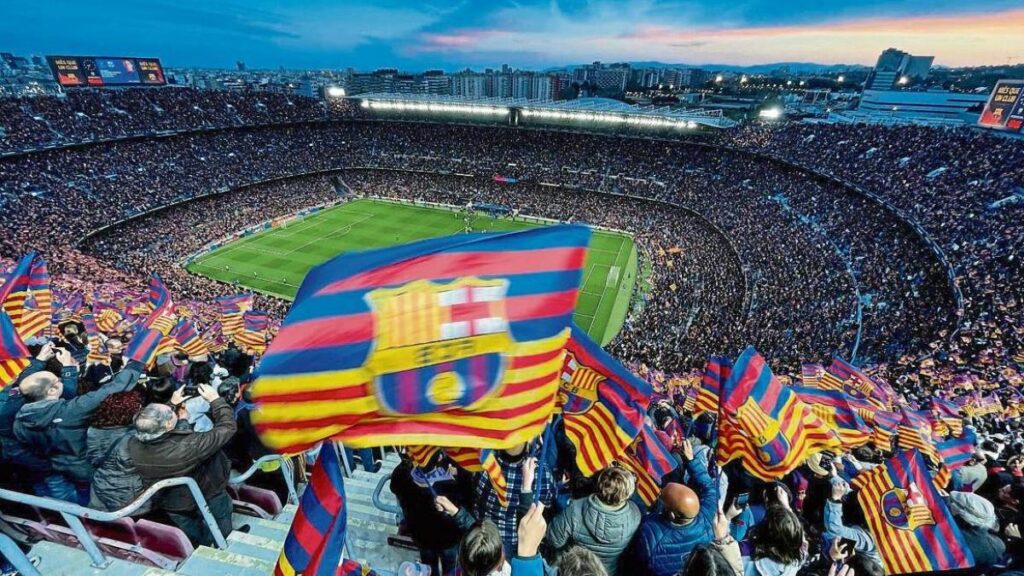

Across the world of football, certain stadiums become more than just places where matches are played. They become symbols of identity, culture, history, and the dreams of millions of supporters.
For FC Barcelona, that place has always been Camp Nou.
For decades, Camp Nou has stood as one of the most iconic football stadiums on the planet. It has been the stage where some of football’s greatest players displayed their talent, where historic victories were celebrated, and where millions of fans experienced unforgettable emotions.
Known for its incredible size, passionate supporters, and connection to Barcelona’s culture, Camp Nou is not simply a stadium. It represents the values, ambition, and identity of one of the world’s most famous football clubs.
From the magical performances of Johan Cruyff and Diego Maradona to the unbelievable brilliance of Lionel Messi, Camp Nou has witnessed generations of football greatness.
However, football never stops evolving.
As modern stadiums become more advanced, FC Barcelona has embarked on one of the biggest stadium transformation projects in football history. The renovated Camp Nou, known as the Spotify Camp Nou, is designed to combine the soul of the old stadium with the technology and facilities of the future.
The Birth of Camp Nou: Building a Home for Barcelona’s Dreams
Before Camp Nou existed, FC Barcelona played at the Camp de Les Corts, a stadium that served as the club’s home from 1922.
However, as Barcelona grew in popularity, the old stadium became too small to accommodate the increasing number of supporters.
The club needed a bigger and more modern stadium that matched its ambitions.
Construction of Camp Nou began in 1954, and the stadium officially opened on 24 September 1957.
Designed by architects Francesc Mitjans Miró, Lorenzo García-Barbón, and Josep Soteras Mauri, Camp Nou was considered a revolutionary stadium at the time.
When it opened, it had a capacity of around 93,000 spectators, making it one of the largest football stadiums in Europe.
The opening ceremony represented a new chapter for FC Barcelona.
Camp Nou was not just a larger stadium.
It was a statement.
It showed that Barcelona was becoming one of the biggest football clubs in the world.
The Meaning Behind the Name: More Than Just a Stadium
The name “Camp Nou” translates from Catalan as “New Ground.”
Although the stadium was originally called Estadi del FC Barcelona, supporters began calling it Camp Nou because it represented a new home and a new era for the club.
Over time, the nickname became official because of its popularity among fans.
The stadium became deeply connected with Catalan culture and identity.
For many supporters, FC Barcelona represents more than football. The club is closely associated with the city of Barcelona and the region of Catalonia.
Camp Nou became a place where football, culture, and community came together.
The Home of Football Legends
Every legendary stadium has legendary players.
Camp Nou has been blessed with some of the greatest footballers in history.
The stadium witnessed the creativity of:
- Johan Cruyff
- Diego Maradona
- Ronaldinho
- Xavi Hernández
- Andrés Iniesta
- Lionel Messi
Each generation created unforgettable memories.
Johan Cruyff transformed Barcelona’s football philosophy both as a player and later as a manager.
Ronaldinho brought joy and creativity, winning the admiration of fans around the world.
But perhaps no player is more connected to Camp Nou than Lionel Messi.
For more than a decade, Messi turned the stadium into his personal stage.
His dribbles, goals, and magical performances created some of the greatest moments in Barcelona’s history.
For Barcelona supporters, watching Messi play at Camp Nou was an experience that represented football at its highest level.
The Unique Atmosphere of Camp Nou
A stadium’s greatness is not only measured by its size or design.
It is measured by the emotions created inside it.
Camp Nou has always had a unique atmosphere because of the relationship between the club and its supporters.
With a capacity of nearly 100,000 fans, the stadium could create an incredible wall of sound during important matches.
When Barcelona attacks, the crowd rises.
When the team scores, thousands of voices become one.
When European nights arrive, Camp Nou transforms into a place filled with passion and expectation.
The stadium has hosted some of football’s most memorable nights, where supporters believed anything was possible.
The Famous Barcelona Style at Camp Nou
Camp Nou became strongly associated with Barcelona’s football philosophy.
The club’s famous possession-based style, often called tiki-taka, reached its peak inside the stadium.
Under managers like Pep Guardiola, Barcelona produced some of the most attractive football ever seen.
The midfield combination of Xavi, Iniesta, and Sergio Busquets controlled matches with incredible precision, while Lionel Messi provided the magic in attack.
During this era, Camp Nou became a symbol of football excellence.
Teams did not simply lose at Camp Nou.
Many were completely overwhelmed by Barcelona’s style and the atmosphere created by the supporters.
Historic Nights Under the Floodlights
Camp Nou has witnessed countless unforgettable matches.
Some of the most memorable moments include:
Barcelona’s Comeback Against Paris Saint-Germain (2017)
One of the greatest Champions League comebacks in history happened at Camp Nou.
After losing the first leg 4–0 in Paris, Barcelona faced an almost impossible challenge.
However, in front of their supporters, Barcelona produced a stunning 6–1 victory to complete one of football’s most dramatic turnarounds.
The atmosphere that night became legendary.
Champions League Triumphs
Camp Nou has celebrated multiple European successes, including Barcelona’s Champions League victories in 1992, 2006, 2009, 2011, and 2015.
Each victory strengthened the connection between the stadium and the club’s history.
The Challenge of Modern Football
Despite its legendary status, Camp Nou began facing challenges in the modern era.
The stadium’s facilities became outdated compared to newer football venues.
Modern supporters expect:
- Better comfort
- Advanced technology
- Improved hospitality areas
- More entertainment options
- Enhanced commercial opportunities
Football clubs today compete not only on the pitch but also financially.
A modern stadium can generate significant income through tourism, events, sponsorships, and hospitality.
Barcelona realized that Camp Nou needed a transformation to remain competitive.
The Spotify Camp Nou Transformation
The renovation project, known as Espai Barça, represents one of the biggest developments in FC Barcelona’s history.
The goal is to transform Camp Nou into one of the most advanced stadiums in world football.
The renovated stadium is designed to include:
1. Increased Capacity
The new Camp Nou is planned to accommodate more supporters, bringing the capacity closer to 105,000 seats.
This would make it one of the largest football stadiums in the world.
2. A Modern Roof Structure
One of the biggest changes will be the addition of a complete roof covering the stadium.
This will improve comfort for supporters while creating a more modern appearance.
3. Improved Fan Experience
The renovated stadium will include:
- Better seating areas
- Modern hospitality spaces
- Improved accessibility
- Advanced digital technology
4. Commercial Growth
The new stadium is expected to generate increased revenue through:
- Stadium tours
- Events
- Restaurants
- Premium experiences
- Sponsorship opportunities
More Than Football: Camp Nou as a Global Attraction
For decades, Camp Nou has attracted visitors from every corner of the world.
Tourists visit Barcelona not only for the city’s culture and architecture but also to experience the home of FC Barcelona.
The stadium has become a football pilgrimage site.
Walking through the tunnel, visiting the trophy room, and seeing the pitch where legends played creates a special experience for fans.
The renovated stadium aims to strengthen this connection by becoming a year-round attraction.
The Emotional Goodbye to the Old Camp Nou
The renovation of Camp Nou has created emotional moments for Barcelona supporters.
For many fans, the old stadium represented childhood memories, family traditions, and unforgettable experiences.
It was the place where parents introduced their children to football.
It was where supporters celebrated victories and shared emotional moments.
Changing a stadium with such history is never easy.
However, Barcelona believes that modernization is necessary to protect the club’s future.
The goal is not to erase the past.
The goal is to build a future worthy of the past.
Camp Nou’s Place Among Football’s Greatest Stadiums
When discussing legendary football stadiums, Camp Nou belongs among the elite.
Alongside places such as:
- Santiago Bernabéu
- Old Trafford
- Anfield
- San Siro
- Wembley
Camp Nou represents football history.
Its greatness comes from the combination of:
- Legendary players
- Historic matches
- Passionate supporters
- Cultural importance
- Unforgettable memories
Few stadiums have influenced football culture as deeply as Camp Nou.
The Future of Camp Nou
The future of Camp Nou represents a new chapter for FC Barcelona.
The challenge will be maintaining the emotional identity of the old stadium while embracing modern football demands.
A stadium can be rebuilt.
Technology can be improved.
Facilities can be upgraded.
But the true spirit of a football ground comes from the people who fill it.
As long as Barcelona supporters continue singing, celebrating, and believing, Camp Nou will remain a special place.
Conclusion: The Stadium Where Football Meets Identity
Camp Nou is not simply a football stadium.
It is a symbol of Barcelona’s history, ambition, and culture.
Inside its walls, legends were created, trophies were lifted, and millions of fans experienced unforgettable moments.
From the brilliance of Cruyff to the magic of Messi, Camp Nou has always provided the stage for greatness.
The renovated Spotify Camp Nou represents the next generation of Barcelona’s story.
It will combine modern technology with the memories and traditions that made the stadium famous.
Because the true power of Camp Nou has never come from the concrete, the seats, or the architecture.
It comes from the passion of the people inside it.
The old Camp Nou created history.
The new Camp Nou is ready to create the future.

