

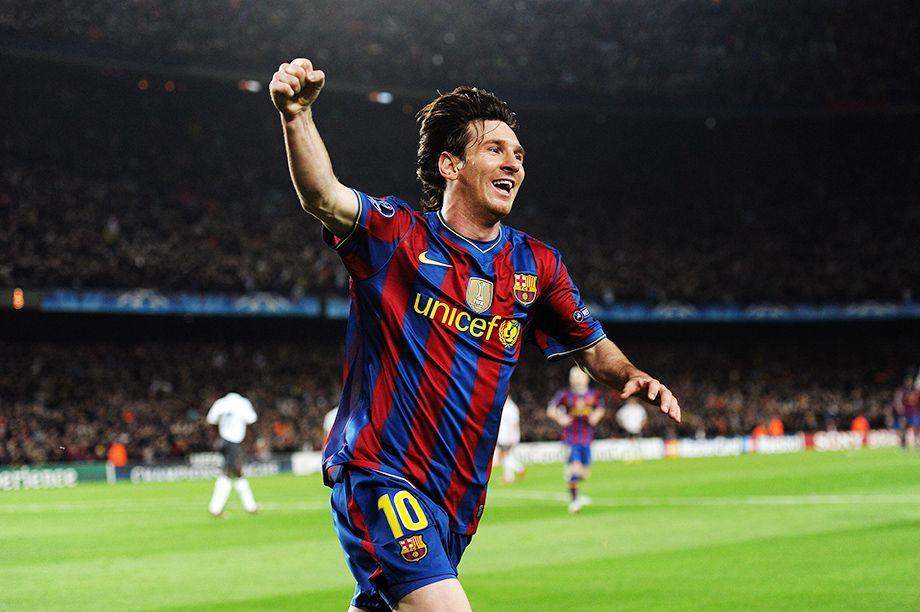

Few footballers have ever changed the way the world understands the game quite like Lionel Messi. His career is a remarkable story of talent, perseverance, humility, heartbreak, redemption, and extraordinary achievement.
For more than two decades, Messi has captivated football fans with a style of play that often seemed impossible. His close control, acceleration, vision, passing, dribbling, and finishing made him one of the most complete attacking players the sport has ever seen.
But Messi’s journey to the top was not straightforward.
Long before he was lifting trophies in front of tens of thousands of supporters, he was a small boy from Rosario, Argentina, with an enormous love for football and a physical challenge that could have changed the direction of his life.
Instead, that boy went on to become a Barcelona legend, an Argentine hero, a World Cup winner, and one of the most decorated footballers in history.
Early Life: The Boy From Rosario
Lionel Andrés Messi was born on 24 June 1987 in Rosario, Argentina.
Football was an important part of his family life. His father, Jorge Messi, worked in a steel factory and was also involved with a local football club, while his mother, Celia, worked in a magnet manufacturing workshop.
Messi began playing football at a very young age.
His natural ability quickly became obvious.
Even as a child, he possessed an extraordinary relationship with the ball. He could control it in tight spaces, change direction quickly, and move past opponents with remarkable balance.
He joined the youth system of Newell’s Old Boys, one of Rosario’s most famous clubs.
There, his talent became impossible to ignore.
However, there was a serious problem.
Messi had been diagnosed with a growth hormone deficiency, which required expensive medical treatment.
For his family, the cost created a major challenge.
At a time when Messi was still a child, nobody could guarantee that his football dream would become reality.
Then came an opportunity that changed everything.
The Move to Barcelona
At the age of 13, Messi moved from Argentina to Spain after FC Barcelona agreed to take him into its famous La Masia youth academy.
Leaving Argentina was a major emotional challenge.
Messi had to leave behind his friends, his familiar environment, and much of his childhood.
But Barcelona saw something extraordinary in him.
The club helped provide the treatment he needed, while Messi began developing within one of the most respected youth systems in world football.
At La Masia, Messi learned to play within Barcelona’s possession-based philosophy.
The emphasis on technique, movement, passing, intelligence, and teamwork suited his natural abilities perfectly.
He progressed rapidly through the youth teams.
It soon became clear that Barcelona had discovered something special.
The Beginning of the Barcelona Legend
Messi made his first-team debut for Barcelona in 2004, at only 17 years old.
He was young, small, and relatively unknown to the wider football world.
That did not last long.
His performances quickly attracted attention.
Messi possessed a rare ability to receive the ball under pressure and immediately create danger.
His low center of gravity allowed him to change direction faster than defenders could react.
He could dribble through several opponents without losing control.
And perhaps most importantly, he made difficult football look simple.
From Prodigy to Superstar
During the early years of his Barcelona career, Messi played alongside some of the greatest footballers of his generation.
Players such as Ronaldinho, Samuel Eto’o, Xavi Hernández, Andrés Iniesta, and later many others helped create an extraordinary Barcelona team.
Ronaldinho was particularly important during Messi’s early development.
The Brazilian superstar recognized Messi’s talent and encouraged the young Argentine.
Soon, however, Messi was no longer simply Ronaldinho’s talented teammate.
He was becoming Barcelona’s main star.
The Guardiola Era
The arrival of Pep Guardiola as Barcelona manager in 2008 transformed the club.
Guardiola built a team around technical excellence, positional play, and intelligent movement.
Messi became the central figure.
Playing alongside Xavi and Iniesta, he became almost impossible to defend.
Barcelona dominated possession, moved the ball quickly, and constantly created opportunities.
Messi was often the player who delivered the final blow.
His goals became increasingly spectacular.
His dribbling became almost impossible for defenders to stop.
His ability to score from outside the box, finish one-on-one, create assists, and influence entire matches established him as one of the world’s best players.
The 2009 Treble
The 2008–09 season became one of the defining periods of Messi’s career.
Barcelona won:
- La Liga
- Copa del Rey
- UEFA Champions League
The team completed a historic treble.
In the Champions League final against Manchester United, Messi scored with a header despite being one of the smallest players on the pitch.
Barcelona won 2–0.
Messi had announced himself on the biggest stage.
The Rise of the Greatest Rivalry
As Messi became more successful, another superstar was rising in England.
Cristiano Ronaldo had become one of the world’s greatest players.
When Ronaldo moved to Real Madrid in 2009, the rivalry between Barcelona and Real Madrid became even more intense.
Messi and Ronaldo became the two defining players of an era.
Their rivalry extended beyond El Clásico.
They competed for goals, trophies, records, and individual awards.
For more than a decade, football fans debated which player was better.
Messi’s supporters pointed to his extraordinary dribbling, creativity, passing, and football intelligence.
Ronaldo’s supporters highlighted his athleticism, physical power, aerial ability, mentality, and goal-scoring consistency.
Regardless of individual preference, their rivalry pushed both players to extraordinary levels.
The 2011 Barcelona Masterclass
One of Messi’s greatest team achievements came in the 2010–11 Champions League.
Barcelona faced Manchester United again in the final, this time at Wembley.
Barcelona dominated large periods of the match and eventually won 3–1.
Messi scored Barcelona’s second goal with a powerful strike from outside the penalty area.
His performance helped reinforce his reputation as the best player in the world.
Barcelona’s football that night became a demonstration of the club’s philosophy.
And Messi was at the center of it.
The Goal-Scoring Machine
Messi was not simply a creative player.
He became an extraordinary goalscorer.
During the 2011–12 season, he scored an incredible 73 goals in all competitions for Barcelona.
His ability to combine playmaking with elite finishing made him exceptionally difficult to defend.
He could create a goal for a teammate and then score one himself moments later.
His famous left foot became one of the most feared weapons in football.
The Barcelona Records
During his years at Barcelona, Messi broke numerous club and football records.
He became Barcelona’s all-time leading goalscorer.
He also became one of the most productive players in European football history.
His career statistics at Barcelona were extraordinary.
He scored hundreds of goals, provided hundreds of assists, won numerous domestic trophies, and helped the club achieve international success.
For many supporters, he became more than a footballer.
He became the face of Barcelona.
The Pain of Argentina
While Messi experienced incredible success at club level, his international career was initially filled with disappointment.
Argentina reached the 2014 World Cup final but lost to Germany after extra time.
Messi won the Golden Ball as the tournament’s best player, but the defeat was heartbreaking.
Then came another painful period.
Argentina lost the Copa América finals in 2015 and 2016, both against Chile.
After the 2016 final, Messi briefly announced his retirement from international football.
The pressure had become enormous.
He was constantly compared with Argentina legend Diego Maradona, and many critics questioned whether Messi could truly be considered an Argentine legend without winning a major international trophy.
But his story was not finished.
Redemption With Argentina
Messi returned to international football.
And eventually, everything changed.
In 2021, Argentina won the Copa América.
Messi was central to the triumph.
After years of international heartbreak, he finally won a major senior international trophy with his country.
The victory was deeply emotional.
The player who had experienced so many painful defeats finally had his moment.
But an even greater achievement was still waiting.
The 2022 World Cup
The 2022 FIFA World Cup in Qatar became the defining chapter of Messi’s career.
At 35 years old, he entered the tournament knowing that it could be his final realistic opportunity to win the World Cup.
Argentina suffered a shock defeat to Saudi Arabia in their opening match.
Suddenly, their campaign was in danger.
But Argentina recovered.
Messi scored important goals throughout the tournament and led his team to the final.
The final against France became one of the greatest matches in World Cup history.
Messi scored twice, while the match ended 3–3 after extra time.
Argentina eventually won the penalty shootout.
Messi lifted the World Cup.
The dream was complete.
The Moment Messi Became Immortal
For years, Messi had been compared with Maradona.
The comparison often centered on one question:
Could Messi win the World Cup?
In 2022, he answered that question.
Standing on the podium with the World Cup trophy, Messi had completed the greatest achievement available to an international footballer.
He had won major club trophies.
He had won individual awards.
He had won the Copa América.
Now he had won the World Cup.
His legacy was secure.
The Move Away From Barcelona
After more than 20 years connected with Barcelona, Messi eventually left the club in 2021.
The departure was emotional and unexpected.
Financial and registration issues prevented Barcelona from renewing his contract under the existing circumstances.
Messi joined Paris Saint-Germain.
The move marked the end of one of the greatest player-club relationships in football history.
He had spent the majority of his professional career at Barcelona.
Leaving was therefore a major emotional moment for both Messi and supporters.
Paris Saint-Germain
At Paris Saint-Germain, Messi entered a new environment.
He played alongside other superstars, including Neymar and Kylian Mbappé.
Although his time in Paris did not reach the same legendary level as his Barcelona career, he helped the club win domestic titles.
More importantly, the move demonstrated that Messi was capable of adapting to a new football environment after spending virtually his entire career at Barcelona.
Inter Miami and a New Chapter
In 2023, Messi moved to Inter Miami in Major League Soccer.
The move represented another major change.
Instead of continuing his career exclusively in European football, Messi chose a new challenge in the United States.
His arrival transformed the global attention surrounding Inter Miami and generated enormous excitement around Major League Soccer.
Messi quickly made an impact.
He helped Inter Miami win the Leagues Cup in 2023, giving the club its first major trophy.
Once again, Messi had entered a new environment and immediately created history.
The Messi Mentality
Unlike many football superstars, Messi has generally maintained a relatively quiet public personality.
He has rarely relied on dramatic statements to define himself.
Instead, he lets his football speak.
His greatest qualities include:
- Extraordinary close control
- Vision
- Passing
- Dribbling
- Finishing
- Football intelligence
- Creativity
- Composure
Perhaps his most remarkable quality is his ability to understand the game.
Messi often appears to see opportunities before they become obvious to everyone else.
A small movement can create space.
A short pass can unlock a defense.
A sudden acceleration can change an entire match.
A Legacy Beyond Statistics
Messi’s greatness cannot be measured only through goals and trophies.
He changed how young footballers think about the game.
For decades, football was often associated with physical strength and athletic dominance.
Messi demonstrated that intelligence, technique, balance, and creativity could be just as powerful.
The sight of a relatively small player moving past much larger defenders became one of the defining images of modern football.
Millions of children around the world attempted to imitate his dribbling style.
His influence became global.
Messi and Ronaldo: Two Different Paths to Greatness
The careers of Messi and Ronaldo are often placed side by side.
Both won multiple Ballon d’Or awards.
Both scored hundreds of goals.
Both dominated European football.
Both won Champions League titles.
Both became global icons.
But their styles were different.
Messi’s game was built heavily around creativity, dribbling, passing, and reading the game.
Ronaldo developed into a powerful, explosive goalscorer with extraordinary athletic ability.
Their differences made their rivalry even more fascinating.
Football may never again experience two players competing at such a high level for such a long period.
Conclusion: The Little Boy Who Conquered Football
Lionel Messi’s story began in Rosario with a young boy who simply wanted to play football.
A physical challenge threatened to make his dream more difficult.
He left Argentina at 13.
He entered Barcelona’s famous academy.
He worked his way into the first team.
Then he changed football forever.
At Barcelona, he became a legend.
With Argentina, he experienced devastating heartbreak before finally achieving international glory.
He won the Copa América.
He won the World Cup.
He became one of the most decorated and celebrated footballers in history.
But perhaps the most beautiful part of Messi’s story is that his greatest weapon was never simply his speed or strength.
It was his relationship with the football.
The ball seemed to belong to him.
Defenders could see what he was doing but often could not stop it.
For more than two decades, Lionel Messi made millions of people fall in love with football.
The boy from Rosario became Barcelona’s greatest modern icon.
The superstar became Argentina’s World Cup hero.
And the footballer became a symbol of what extraordinary talent, perseverance, and imagination can achieve.
Lionel Messi did not merely play football.
He made the game look like art.